

Rights groups are raising concern over a surge in technology-facilitated gender-based violence (TFGBV) targeting women human rights defenders.
A new report by the Women Human Rights Defenders (The Hub) shows that between February and March 2026, 165 cases of TFGBV were documented across the country, 32 per cent of them involving women environmental defenders, who remain among the most vulnerable.
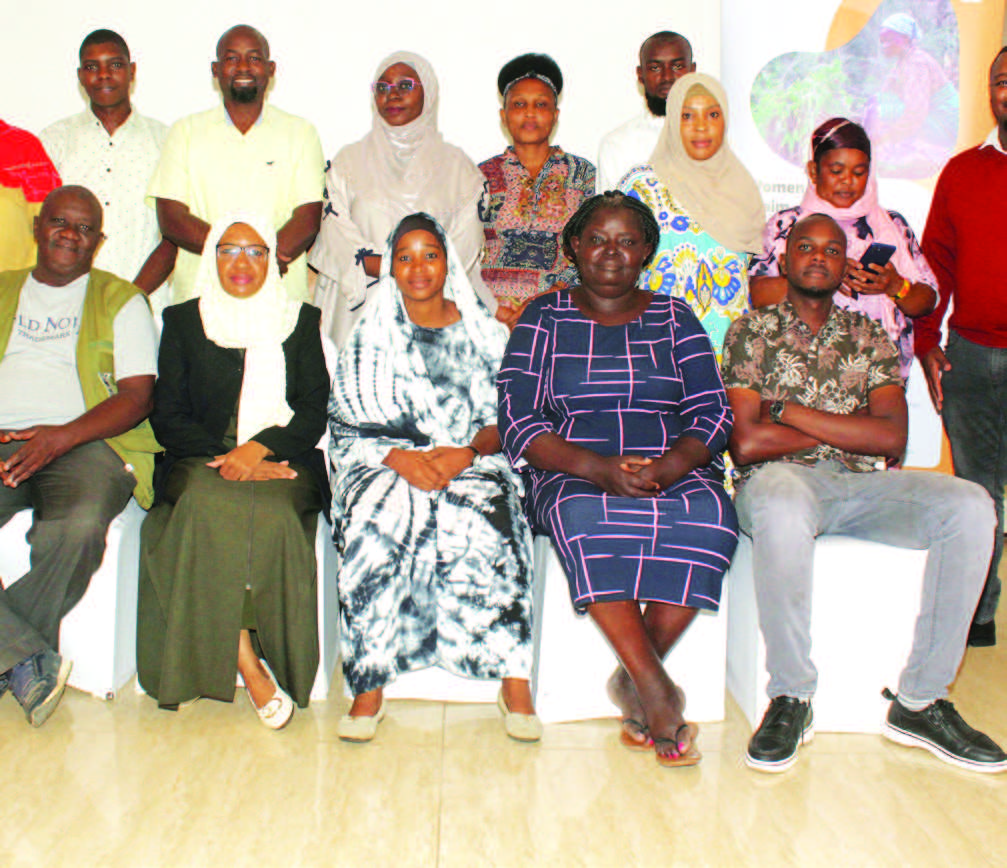
Speaking on Tuesday, April 28, 2026 at Diani during a two-day UNDP Kwale County Policy Dialogue Forum, WHRD officer Francis Ndegwa described the trend as alarming and called for urgent interventions to protect women defenders and hold perpetrators accountable.
“One of the major challenges women face is TFGBV. According to our statistics, environmental defenders are at the receiving end of this vice. This forum is a priority step in exploring how we can better report cases and ensure perpetrators face justice,” he said. Ndegwa added that creating safe digital and physical spaces for women defenders is crucial as online attacks increasingly escalate into offline harm. The officer called for policy reforms to ensure that technology-facilitated gender-based violence (TFGBV) is explicitly recognised as a form of gender-based violence rather than being treated solely as a cybercrime.
He said the WHRD has intensified efforts to engage women environmental defenders, media practitioners, civil society organisations (CSOs), as well as county and national government officials in critical discussions on climate change. Ndegwa noted that the engagement is also focus on promoting the inclusion of women in environmental decision-making and examining policy gaps to develop coordinated and sustainable solutions.
Low participation
He added that the forum is also geared towards exploring available environmental funds and identifying how women can access them to support conservation initiatives. “We are reviewing existing environmental policies, their implementation, and the funding mechanisms that support environmental work. Our goal is to ensure women can tap into these resources to spearhead conservation projects,” he said.
A Kwale-based women environmental defender Mariam Omar lamented the low participation of women in environmental and climate-related initiatives.
Omar appreciated the county government’s eforts to include women in environmental matters but noted that more still needs to be done to strengthen their involvement and influence in climate-related initiatives.
“We realised that women’s inclusion in climate change and gender-based decision-making is still very low, and this calls for the need to sit together and develop environmental and genderresponsive solutions,” she said. Omar urged for greater involvement of women in climate change adaptation initiatives, noting that their lived experiences place them at the centre of environmental challenges and recovery eforts.
She said women are often the first to feel the impact of droughts, floods and resource scarcity, yet remain underrepresented where key decisions are made.
Omar further noted that many women-led conservation groups in the county struggle to access climate financing due to bureaucratic barriers, limited information and lack of technical support.
She called on county and national governments, as well as development partners, to prioritise gender-inclusive environmental policies, arguing that meaningful progress in climate action cannot be achieved without women at the forefront. Kwale Civil Society Organisation representative Mgeni Mwamboga echoed similar sentiments, insisting that more women must be integrated into climate change projects.
She noted that women in rural communities are often left behind, despite bearing the greatest burden of climate change impacts such as water scarcity, failed crops and disrupted livelihoods.
Mwamboga urged stakeholders to design climate programmes that intentionally target women at the grassroots, arguing that excluding them weakens community resilience and slows progress toward sustainable environmental management.
SAFE SPACES
The officer called for policy reforms to ensure that technologyfacilitated gender-based violence (TFGBV) is explicitly recognised as a form of gender-based violence rather than being treated solely as a cybercrime.
Creating safe digital and physical spaces for women defenders is crucial as online attacks increasingly escalate into offline harm.