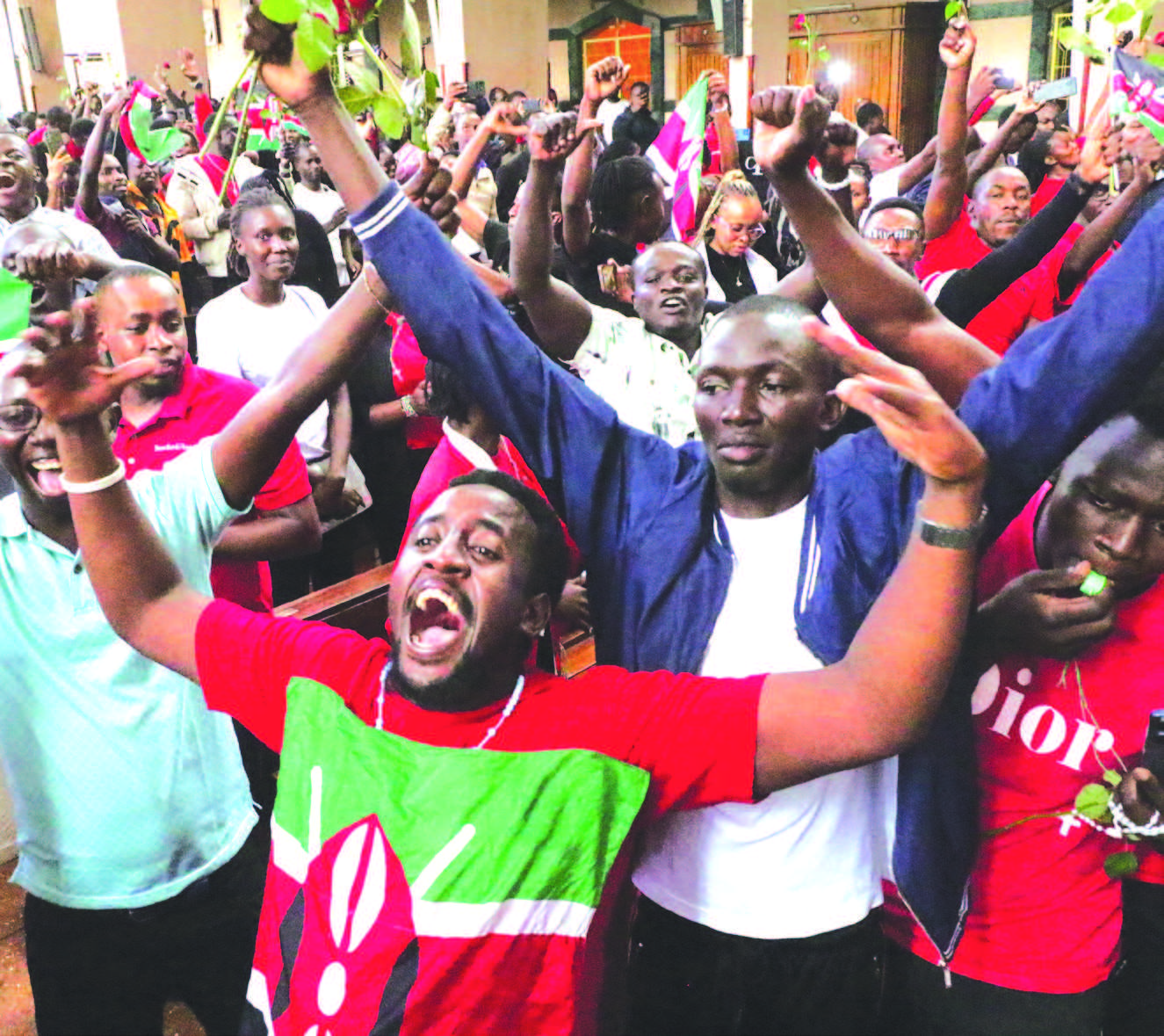


When opposition leaders called for a rally at Kamukunji Grounds on July 7, 1990, they were demanding one thing; the return of multiparty democracy.
Thirty-six years later, the day that came to be commemorated as Saba Saba carries a much broader meaning. While the demands have moved from political freedoms to economic justice and government accountability, the movement remains a powerful symbol of citizens challenging those in power.
Original Saba Saba protests were led by veteran politicians including Kenneth Matiba, Charles Rubia and Jaramogi Oginga Odinga, who defied the Daniel arap Moi government’s ban on the rally. Protesters gathered despite the restrictions, triggering violent crackdowns by security forces, mass arrests and deaths.
Although the demonstrations were suppressed, they marked the beginning of Kenya’s Second Liberation. Public pressure eventually forced the repeal of Section 2A of the Constitution in 1991, restoring multiparty democracy after years of one-party rule.
The second generation of Saba Saba emerged in the 2000s as the country’s focus shifted from political pluralism to strengthening democratic institutions.
The movement increasingly involved civil society organisations, human rights defenders and community activists. The push eventually climaxed in the promulgation of the Constitution of Kenya in 2010, widely seen as one of the biggest achievements of Kenya’s reform movement.
Even after the new Constitution came into force, activists continued using Saba Saba to demand accountability, transparency and respect for human rights.
Digital mobilisation
The latest chapter has been shaped by Gen Z, whose protests have transformed both the organisation and message of the movement.
Unlike the rallies of the 1990s, today’s demonstrations are largely leaderless and organised through digital platforms.
Instead of relying on political parties or prominent opposition figures, young people coordinate online, mobilising thousands within hours.
Their demands also reveal the realities facing many young Kenyans. Rather than focusing solely on political reforms, protesters have raised alarms over taxation, unemployment, high cost of living, corruption, public debt, alleged abductions and police brutality.
The 2024 #RejectFinanceBill protests marked a defining moment for this generation, showing the growing influence of digital mobilisation in shaping national conversations. Since then, demonstrations have spread beyond Nairobi into towns across the country.
Despite these changes, one theme has remained constant across all three generations, citizens demanding greater accountability from those in power.
What has changed is how that message is delivered. The first generation relied on organised political leadership and physical rallies. The second combined institutional advocacy with community organising. Today’s movement is decentralised, technology-driven and sustained by ordinary citizens who often reject formal leadership structures.
The meaning of Saba Saba has therefore expanded. It is no longer remembered only as the anniversary of Kenya’s struggle for multiparty democracy but also as a reminder that democratic rights require continuous public participation.
The movement has also become a bridge between generations. Veterans of the Second Liberation have widely expressed support for young protesters, describing the current movement as a continuation of the struggle they began more than three decades ago.
As Kenyans mark another Saba Saba, each generation has used the day to challenge the country’s biggest governance concerns of its time, ensuring that Saba Saba continues to evolve from a historical event into a living symbol of civic action and democratic accountability.
Lobby groups have formally notified the Inspector General of Police and other security agencies of planned demonstrations.
The planned protests come as leaders continue to differ on the need for demos. Madaraka MP George Aladwa has said ODM supporters would not take part in the march and urged the government to provide security.
“Those who do casual labour should go because they earn money daily, because there are leaders who plan protests and then run away when that day comes,” said Aladwa.
CHANGING DEMANDS
Saba Saba marked the beginning of Kenya’s Second Liberation where public pressure eventually forced the repeal of Section 2A of the Constitution in 1991
Second generation of Saba Saba emerged in the 2000s as the country’s focus shifted from political pluralism to strengthening democratic institutions
Unlike the rallies of the 1990s, today’s demonstrations are largely leaderless and organised through digital platforms