

African leaders have sounded the alarm over a deepening crisis on sexual health of young people on the continent.
Players in health sector are demanding urgent interventions including youth centred investment in reproductive health services across the continent as a response to the shrinking funding, lack of political will and consent barriers.
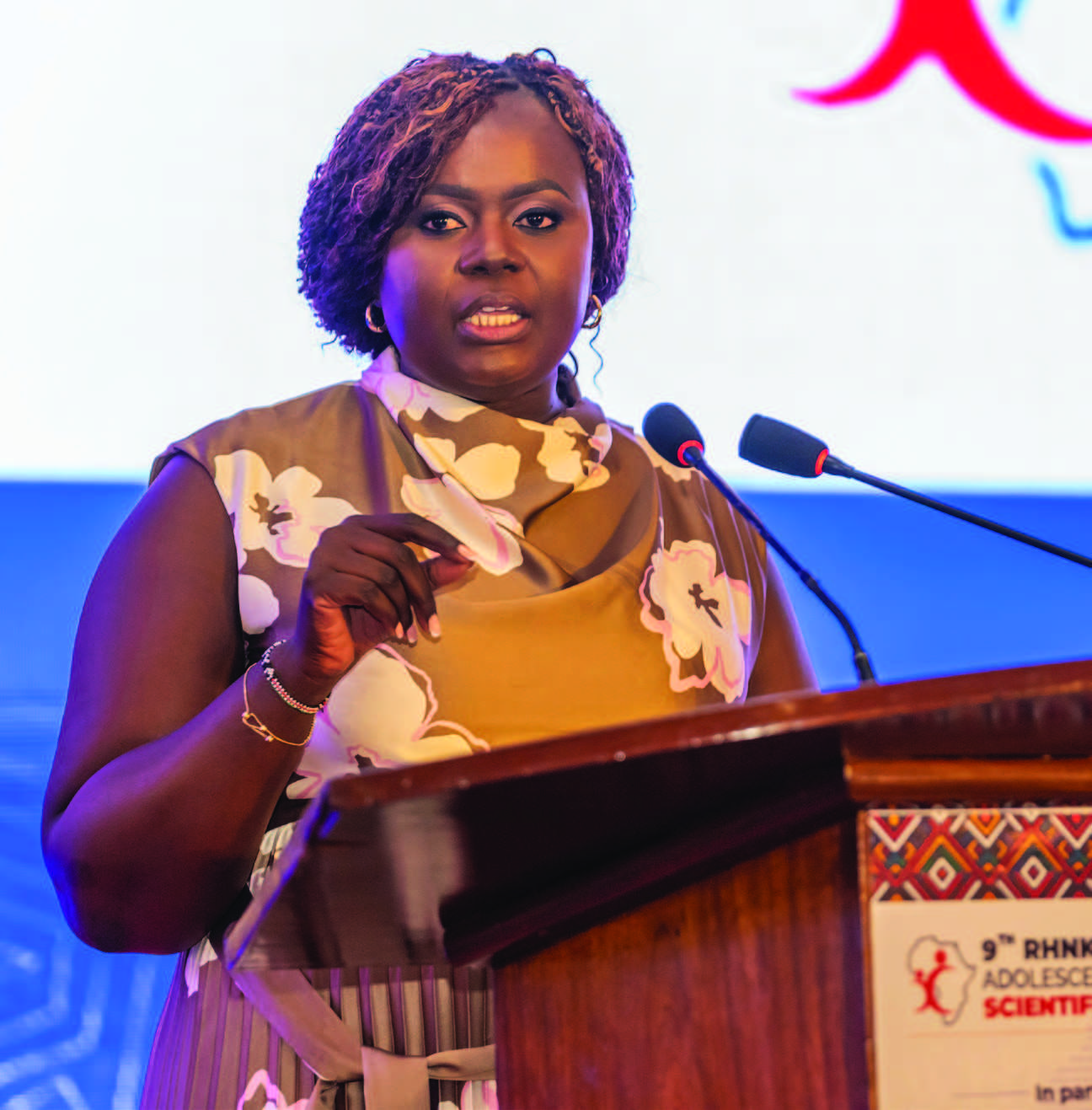
Speaking during the 9th Pan African Adolescent and Youth Sexual and Reproductive Health and Rights (AYSRHR) Scientiic Conference opened in Mombasa recently, actors in health sector called for safeguarding adolescent sexual reproductive health (ASRH) amid fears of a full-blown crisis going by latest health indicators.
The four-day crucial conference discussed issues surrounding funding gaps in an adolescent health care and reproductive health programme in Kenya and Africa at large.
Systemic failure
Health leaders, government oicials and young people present regretted thatAfrica’s adolescents are being systematically failed by the very institutions meant to serve them. Participants fears that the window to reverse course is closing fast. The conference was convened by the Reproductive Health Network Kenya (RHNK) in partnership with the Ministry of Healthy (MOH and the National Council for Population and Development and, for the irst time, the government of Uganda as an oicial partner.
Teenage pregnancy
Dr Edward Serem, Head of the Division of Reproductive, Maternal, Newborn, Child and Adolescent Health (RMNCAH) said the conference is a response to challenges that cut across every part of the continent. “In Africa, mostly in sub-Saharan Africa, we see the challenges of teenage pregnancy, HIV infections, and drug and substance abuse.
It is those challenges which are facing each and every part of our con-tinent, which has made us to converge here.” He urged delegates to use the four days to exchange working policies and learn interventions they can take home.
Hostile environment
Dr Claudia Shilumani, who assumed the role of International Planned Parenthood Federation (IPPF) Africa Regional Director three months ago, grounded the discussion in evidence.
“Sub-Saharan Africa has the highest teenage pregnancy and adolescent birth rates in the world. Eastern and Southern Africa has the highest prevalence of HIV,” she said, warning that the consequences extend far beyond health.
“A 15-year-old girl who becomes pregnant does not just face a health risk. She faces the end of her education, the narrowing of her economic future, the weakening of her voice in her own community,” noted Shilumani.
On his part, Dr Samukeliso Dube, FP2030 Executive Director noted that while countries such as Rwanda have brought teenage pregnancy rates down to 39 per thousand, others like Mozambique still record 180 per thousand — a gulf that underscores the unevenness of progress.
“We are running a continent, on luck and hope. We have, for many years, hidden behind it is just maternal health, maternal mortality, when we don’t fund reproductive health services for adolescents. Yet we know the very numbers that we see in maternal mortality are driven by these unintended pregnancies.” Issues surrounding the age-of-consent barrier that locks adolescents out of reproductive health services also continues to generate a heated debate.
According to Nelly Munyasia, RHNK executive director says a referral document on adolescent consent, developed through a collaboration between RHNK, the Kenya Judiciary Academy, healthcare providers, and young people from across Africa, will be launched during the conference.
“The judiciary told us, if only they knew better, they would not have made the kind of decisions they’ve made in courts,” she disclosed adding that justices from Zambia, Malawi, and other nations in attendance would engage directly with the evidence on adolescent health.
Speakers were unsparing in naming the inancial pressures taking a huge toll on SRHR programming. Dr Shilumani described a hostile operating environment in which civic space is tightening and funding is shifting dangerously.
“The expanded Global Gag Rule has disrupted integrated health systems, fragmented services, and disproportionately harmed the most vulnerable — our women and girls. Its ripple efects extend far beyond abortion services. We are seeing impacts on HIV prevention, maternal health, as well as primary healthcare,” she said.
A 15-year-old girl who becomes pregnant does not just face a health risk. She faces the end of her education, the narrowing of her economic future.
DR CLAUDIA SHILUMANI